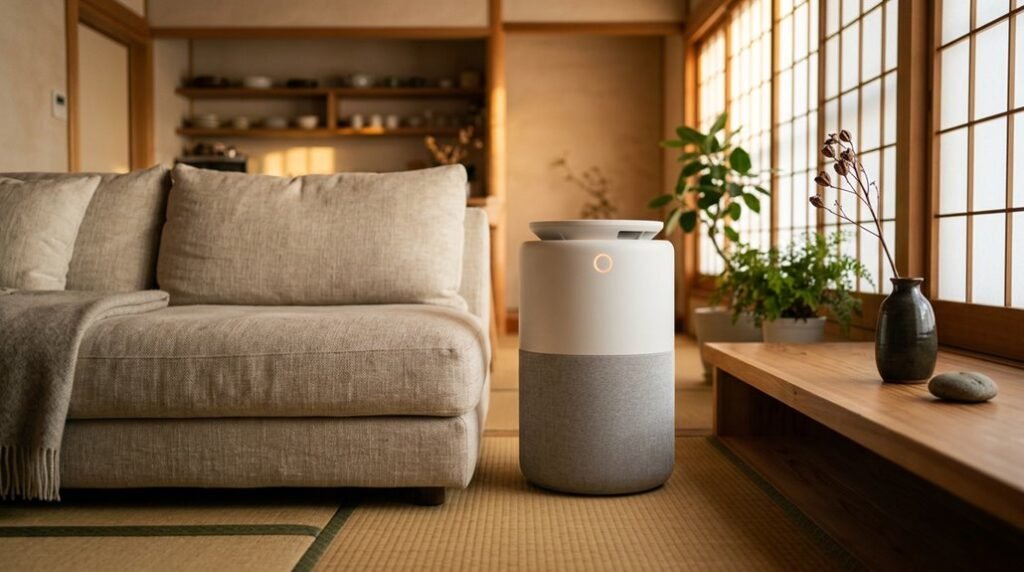
Most people assume Japanese air purifiers are just smaller versions of what you’d find elsewhere, but the country’s unique approach to filtration rewrites that assumption entirely.
Instead of chasing higher CADR numbers with bigger fans, manufacturers like Kaltech and Sharp invest in photocatalyst technology and biometric humidity sensors that respond to your actual living conditions, not just particle counts.
And here’s what makes this lineup worth your attention: five models that trade disposable HEPA guilt for washable filters, USB-C portability, and even wall-mounted solutions that save floor space.
The catch?
Each one solves a very different problem.
| Kaltech KL-W01U Wall-Mounted Air Purifier (Main Unit Only) | Best Wall-Mounted | Core Technology: LED photocatalyst | Coverage Area: 560 sq ft | Filter Type: Washable dual-filter (photocatalyst + pollen/dust) | VIEW LATEST PRICE | Read My Analysis | |
| Kaltech Mini KL-E01 Photocatalytic Air Purifier (Made in Japan) | Best Compact | Core Technology: LED photocatalyst | Coverage Area: 200 sq ft | Filter Type: Washable dual-filter (photocatalyst + pollen/dust) | VIEW LATEST PRICE | Read My Analysis | |
| SHARP Air Purifier and Humidifier Combo (KC850U) | Best for Large Spaces | Core Technology: Plasmacluster ion + HEPA | Coverage Area: 1,230 sq ft/hour | Filter Type: Triple filtration (pre-filter + carbon + True HEPA) | VIEW LATEST PRICE | Read My Analysis | |
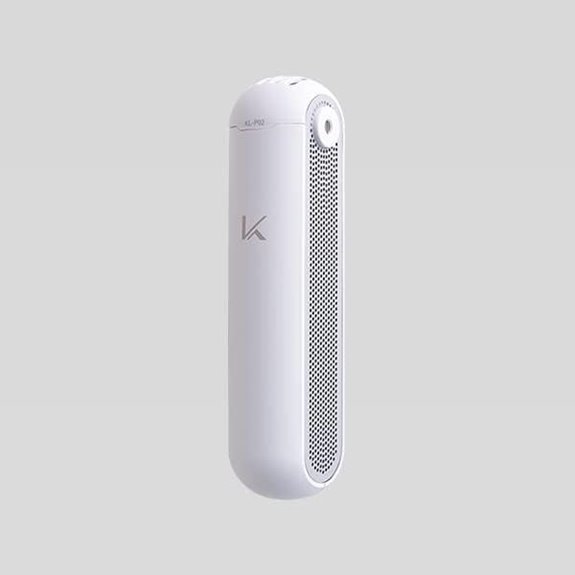
| MY AIR KL-P02UX Rechargeable Air Purifier (White) | Best Portable Personal | Core Technology: LED photocatalyst | Coverage Area: Personal/portable | Filter Type: Washable dual-filter (photocatalyst + pollen/dust) | VIEW LATEST PRICE | Read My Analysis | |
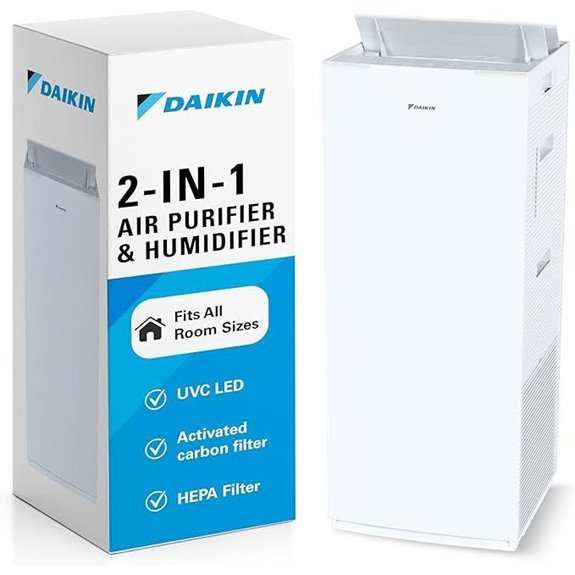
| Daikin HEPA Air Purifier with UVC LED (MCKB70YSAU) | Best HEPA + Humidifier | Core Technology: HEPA + UVC LED | Coverage Area: 350 sq ft (AHAM Verified) | Filter Type: Three-stage (pre-filter + HEPA + activated carbon) | VIEW LATEST PRICE | Read My Analysis |
More Details on Our Top Picks
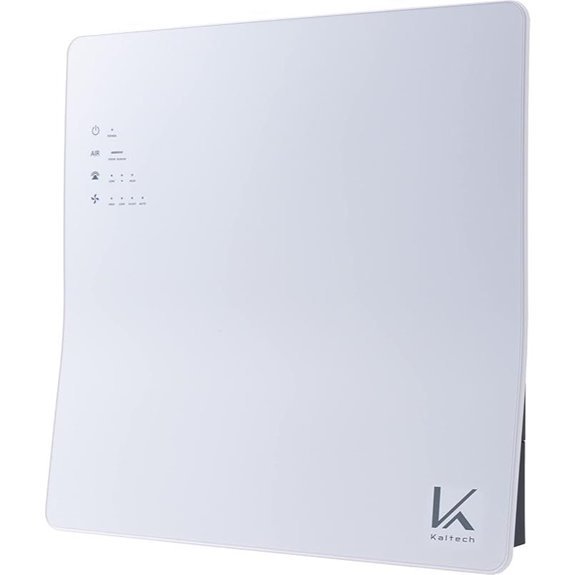
Kaltech KL-W01U Wall-Mounted Air Purifier (Main Unit Only)
If you’ve got pets, a cramped apartment, or just hate bulky floor units hogging your space, I’ve got a wall-mounted option worth your attention.
The Kaltech KL-W01U uses Japanese LED photocatalyst technology, meaning it actually decomposes harmful organic stuff at the molecular level rather than just trapping particles. We’re talking VOCs, smoke, odors, even pet allergens.
It targets particles down to 0.0001 microns, which is smaller than what conventional filters catch.
Here’s what makes this unit stand out:
- No filter replacements ever. Just wash the dual-filter system every few months
- Runs whisper-quiet at 20 dB on Low, stays under 44 dB at full power
- Four modes: High, Low, Silent, Auto, plus an odor sensor
- Night Mode dims all lights for uninterrupted sleep
- Covers up to 560 square feet
It’s UL and CARB certified, meets California ozone limits, and weighs just 6.6 pounds. The 3.27-inch profile hugs your wall without protruding into your living space.
One heads up: this won’t remove visible mold. Clean surface mold first, then position the unit nearby for airborne concerns.
- Core Technology:LED photocatalyst
- Coverage Area:560 sq ft
- Filter Type:Washable dual-filter (photocatalyst + pollen/dust)
- Ozone/UV Status:No ozone, no UV
- Noise Level (dB):20 dB (Low) / 44 dB (High)
- Certifications:UL Certified, CARB Certified, EPA Est No. 103656-JPN-1
- Additional Feature:Wall-mounted design
- Additional Feature:24/7 continuous operation
- Additional Feature:Night Mode dimming
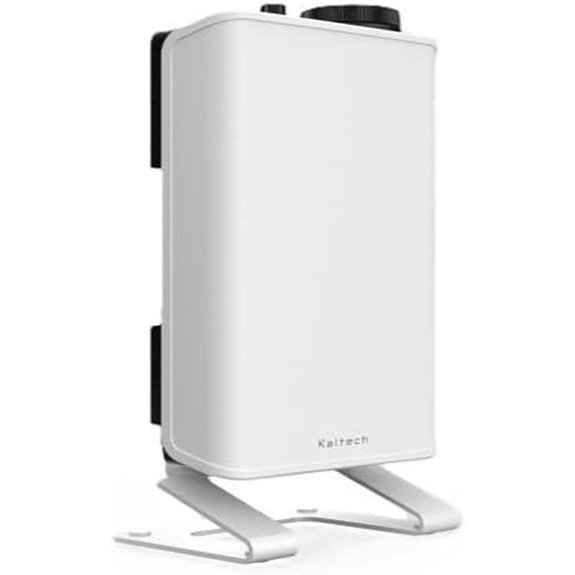
Kaltech Mini KL-E01 Photocatalytic Air Purifier (Made in Japan)
For anyone tight on space, I keep coming back to the Kaltech Mini KL-E01, which is the compact Japanese air purifier that punches way above its weight.
This little unit uses Japanese LED photocatalyst technology to actually decompose harmful substances at the molecular level, not just trap them. We’re talking VOCs, smoke, odors, pet allergens, even particles down to 0.0001 microns. That’s smaller than what conventional HEPA filters typically catch.
Here’s what makes it different:
- No HEPA, no UV, no ionization, no ozone. Just a safe 410nm visible light LED activating the photocatalyst
- Washable, reusable dual-filter system: photocatalyst filter plus pollen/dust filter
- Runs whisper-quiet at 20 dB on Low, draws only 6–10 watts, and never shuts off automatically
At 4.5 x 9.8 x 2.8 inches and under 1.8 lbs, it fits practically anywhere. Mount it on your wall, stand it on a shelf, or hang it out of reach from curious kids and pets.
Coverage? Up to 200 square feet.
One heads-up: if you’re dealing with mold, clean visible growth first, then position this nearby to address airborne organic matter. It’s not a medical device, but it has solid backing from University of Tokyo and RIKEN Laboratory testing.
For nail salons, it even tackles chemical odors like toluene and acetone. Made in Japan, UL certified, EPA registered. Small package, serious chemistry!
- Core Technology:LED photocatalyst
- Coverage Area:200 sq ft
- Filter Type:Washable dual-filter (photocatalyst + pollen/dust)
- Ozone/UV Status:No ozone, no UV
- Noise Level (dB):20 dB (Low)
- Certifications:UL Certified, EPA Est. No. 103656-JPN-1
- Additional Feature:Hanging style option
- Additional Feature:6-10 watt operation
- Additional Feature:Freestanding or wall-mount
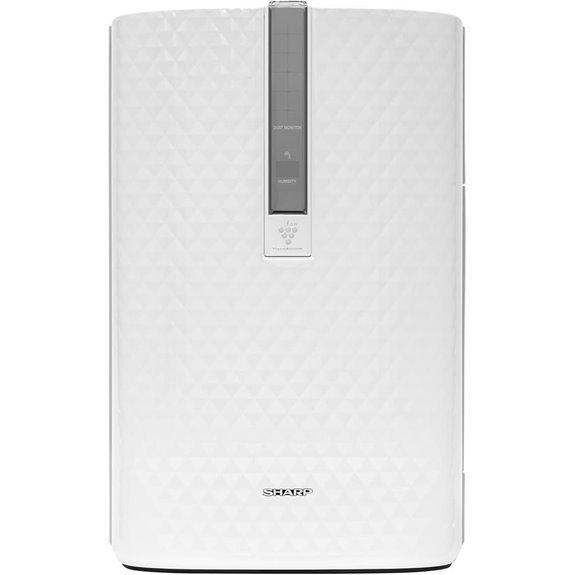
SHARP Air Purifier and Humidifier Combo (KC850U)
Allergy sufferers, pet owners, and anyone dealing with dry winter air. I think the KC850U hits a sweet spot that pure purifiers miss completely.
The triple filtration grabs what matters: washable pre-filter for dust bunnies, activated carbon for cooking odors, and True HEPA catching 99.97% of particles as small as 0.3 microns.
But here’s where it gets intriguing. SHARP’s Plasmacluster Ion Technology (positive and negative ions from water vapor) actively targets bacteria, mold, and viruses like MS2 in areas up to 1,230 square feet.
I appreciate the Auto Mode doing the thinking for me, adjusting both purification and humidity as sensors detect impurities. Three fan speeds plus specialized modes: Pollen for seasonal misery, Quick Clean for ion blasts, and that Library Quiet 26 dB setting for bedrooms.
Filter longevity impresses: HEPA lasts 2-5 years, humidifying filter up to 5 years depending on your environment. At 20.5 pounds and roughly 23 inches tall, it requires floor space, but ARB certification means minimal ozone concern (under 0.01 ppm).
- Core Technology:Plasmacluster ion + HEPA
- Coverage Area:1,230 sq ft/hour
- Filter Type:Triple filtration (pre-filter + carbon + True HEPA)
- Ozone/UV Status:ARB Certified, <0.01 ppm ozone
- Noise Level (dB):26 dB (Library Quiet) / 36 dB (spec)
- Certifications:ARB Certified
- Additional Feature:Plasmacluster Ion Technology
- Additional Feature:Auto humidity adjustment
- Additional Feature:Library Quiet® setting
MY AIR KL-P02UX Rechargeable Air Purifier (White)
The MY AIR KL-P02UX is a standout choice if you need clean air that travels with you. This pocket-sized powerhouse, made in Japan, weighs just 2.89 ounces and measures 1.3 inches by 4.5 inches. I slip mine into my bag without a second thought.
Here’s what makes it tick:
- Japanese LED photocatalyst technology decomposes organic substances at the molecular level, targeting particles down to 0.0001 microns (yes, really!)
- Dual-filter system: photocatalyst filter plus pollen/dust filter, both washable and reusable
- 410 nm visible light LED activates the photocatalyst, breaking down pet allergens, pollen, and VOCs into water and CO2
No HEPA, no UV, no ozone, no replacement filters. Just soak the filters in water every few months and you’re set.
The 2nd Gen upgrade delivers 11–12 hours of battery life via USB-C charging, up from 8 hours. The soft airflow wraps gently around your face, not blasting you like a desk fan.
EPA, UL, and CARB certified. For commuters, travelers, or anyone who wants personal clean air without the hassle, this little device delivers!
- Core Technology:LED photocatalyst
- Coverage Area:Personal/portable
- Filter Type:Washable dual-filter (photocatalyst + pollen/dust)
- Ozone/UV Status:No ozone, no UV
- Noise Level (dB):Not specified (soft airflow)
- Certifications:UL Certified, CARB Certified, EPA Est. No. 103656-JPN-1
- Additional Feature:USB-C rechargeable
- Additional Feature:11-12 hour battery
- Additional Feature:Personal soft airflow
Daikin HEPA Air Purifier with UVC LED (MCKB70YSAU)
I recommend the Daikin MCKB70YSAU if you’re after one device that handles both purification and humidity without compromise.
This unit packs a three-stage filtration stack: pre-filter, H13 HEPA (99.97% at 0.1 microns), and activated carbon for odors. The UVC LED adds microbial inactivation for whatever gets trapped, which matters more than you’d think.
And yes, there’s a built-in humidifier with five operating modes, so you’re not buying a second appliance.
Coverage impresses at 350 sq ft with AHAM verification, pulling air from three directions. Quiet mode hits 23 dB (barely a whisper), plus dust and odor sensors auto-adjust as conditions change.
Side handles help when you’re relocating it, filters swap out easily, and it’s certified zero ozone. The 1,680 sq ft hourly rating means it’ll handle open plans in spurts.
- Core Technology:HEPA + UVC LED
- Coverage Area:350 sq ft (AHAM Verified)
- Filter Type:Three-stage (pre-filter + HEPA + activated carbon)
- Ozone/UV Status:Zero Ozone Certified, UVC LED
- Noise Level (dB):23 dB (Quiet mode)
- Certifications:AHAM Verified, CARB Certified, Zero Ozone Certified
- Additional Feature:3-directional air suction
- Additional Feature:UVC LED inactivation
- Additional Feature:5 operating modes
Factors to Consider When Choosing a Japanese Air Purifier
I’ll help you pick the right unit by breaking down what actually matters when you’re staring at a wall of Japanese air purifiers online. Here’s what I always look at first: which purification technology matches your specific air quality battles, how much square footage you’re really covering, and whether you’ll remember to swap filters when the time comes. And don’t sleep on noise levels and power draw, because nobody wants a bedroom hum that sounds like a distant refrigerator or an electricity bill that doubles just to breathe cleaner.
Purification Technology Type
When you’re shopping for a Japanese air purifier, the first thing you’ll notice is that these machines don’t all clean the same way, and that’s actually where things get interesting!
You’ll encounter two main approaches. Photocatalyst models use visible LED light around 410 nanometers to break down VOCs and odors chemically, targeting molecules as tiny as 0.0001 microns. No HEPA, no UV, no ozone, and no ions, just pure molecular decomposition.
Alternatively, some higher-end units combine true HEPA filters, which capture 99.97% of particles 0.3 microns and larger, with activated carbon for smells. And a few systems add UVC LED for zapping trapped microorganisms.
Coverage Area Size
Because coverage claims can be surprisingly slippery, you’ll want to look past the bold numbers on the box and figure out what they actually mean for your space.
Japanese manufacturers list coverage in two ways, and the difference matters:
- Room-size ratings (e.g., 200 sq ft for compact units, 560 sq ft for wall-mounted photocatalyst models, up to 1,230 sq ft for air purifier/humidifier combos) assume specific air-exchange rates at certain fan speeds
- Hourly “clean air delivery” figures (like 1,680 sq ft/hour) sound impressive but describe total volume processed, not effective treatment area
Battery-powered personal units? Cute, but they’re for your desk, not your den.
Here’s my rule: match the stated square footage to your actual room volume, then size up if you’ve got pets, smokers, or that one friend who burns incense. Better airflow capacity and multi-stage filtration usually hide behind bigger numbers.
Filter Maintenance Needs
Coverage area gets you in the door, but filter maintenance is what keeps you married to the thing.
I always tell people to look hard at the replacement schedule before they buy. Here’s the breakdown:
HEPA/activated carbon models: Replace every 2–5 years for the HEPA, plus separate carbon intervals. Fine if you don’t mind periodic shopping.
Photocatalyst designs: Washable dual filters you soak in water every few months. No replacement needed, just elbow grease.
Portable rechargeable units: Usually washable and reusable, though dusty spaces mean more frequent cleaning.
Combo air + humidification: More moving parts. You’re tracking humidifying filter life (around 5 years, depending on conditions) alongside everything else.
My advice? Check whether filters are replaceable versus washable, and read the fine print on “no replacement required.” That promise only holds if you actually clean them.
Noise Level Considerations
Though I’ve spent years fixating on CADR figures and filter specifications, I’ll admit it straight up: noise is what actually makes or breaks your daily experience with an air purifier.
You’ll want to track down published dB ratings across every operating mode. Some gems reach 20 dB on Low and stay under 44 dB even at full blast, while others cite 23 dB in quiet mode. But here’s the catch: manufacturers measure differently. One unit’s “Library Quiet® Low” at 26 dB jumps to 36 dB in the real-world specs, so dig for the night mode figure you’ll actually sleep beside.
For peaceful nights, prioritize: clear night/dimmed indicator features, extremely low minimum sound settings, and manual Low/Silent options.
Watch out for auto mode, though. Those dust and odor sensors? They’ll ramp fan speed when pollution spikes, jolting you awake. And gentler airflow designs can balance quiet operation with reliable sensor-driven performance.
Power Consumption Efficiency
How much will this thing actually cost me to run? I check wattage first, since that’s where your money actually goes.
Quick comparison:
- Sharp KC850U: 50W (higher draw, but powerful)
- Kaltech wall/mini units: 6–10W (photocatalytic LEDs sip power)
Photocatalytic models with 410 nm LEDs run 24/7 cheaply, though cranking fan speed changes the math. And smart Auto modes help, throttling down when air quality looks good, so your average draw often sits below that scary max rating.
Battery-powered personal units? Calculate runtime versus plug-in costs. One rechargeable model gives 11–12 hours per USB-C charge, which can beat wall power for spot use.
HEPA-plus-UVC systems demand more watts for fans and bulbs. Verify that coverage claim matches your room, or you’re just burning electricity for show.
Portability and Installation
For portability and installation, I always start by picturing exactly where this thing’s going to live, because Japanese manufacturers love giving you options, and those options matter more than you’d think.
You’ve got three main paths here. Which fits your life?
- Freestanding, The classic floor or desk approach. Move it where you need it.
- Wall-mounted, Hardware included, often crazy thin (around 3.27 inches on some models), keeps units away from curious kids and pets.
- Handheld/personal, Rechargeable, USB-C charging, sometimes weighing just 0.18 pounds with 11-12 hour battery life.
Check your power situation too. Some units need 120V/60Hz (North America), others handle 100-240V worldwide.
And don’t skip the intake/exhaust placement! Wall units save space, portable models chase problems room to room, compact designs offer gentle face-level airflow rather than blasting a whole space. Match dimensions to your actual needs, not your aspirational ones.
Targeted Contaminants Scope
Before I even look at CADR numbers or fan speeds, I need to know exactly what this purifier thinks it’s fighting, because “clean air” means wildly different things depending on who’s building the machine.
Some units stop at airborne particles, while others dive deeper into molecular territory: think VOCs, smoke, and odors at the chemical level, not just whatever gets trapped in a filter. Japanese photocatalytic designs get particularly ambitious here, claiming they’ll snag substances down to 0.0001 microns. That’s odor molecule territory!
But here’s what I watch for:
- Does it actually list what allergens it handles, or just toss around vague “mold” claims? (Usually they mean airborne organics, not that patch on your shower tile.)
- Any mention of specific organisms like Staphylococcus aureus, and does it explain how it deals with them?
- What’s not covered? Many photocatalytic units are notably honest: no HEPA, no UV, no ozone, and definitely no surface mold removal.
Match the scope to your actual problem, not your optimism.
Certification Standards Met
Certifications aren’t just sticker decoration, they’re your shortcut to knowing someone’s actually checked the claims. I always dig into these four before recommending anything:
UL Certified and CARB Certified prove the unit won’t zap your circuits or spew illegal ozone. California’s pretty strict here, so CARB compliance actually matters everywhere!
Spot phrasing like “Zero Ozone” or low-ozone compliance, and grab those reported ozone levels when available (lower is genuinely better).
See an EPA Establishment number? That’s your manufacturer registration confirmation right there.
And AHAM Verified? That’s independent performance backup with standardized methods, not just marketing fluff.
But watch the details! “No ozone generation” and “low ozone emissions” aren’t twins, they’re cousins with different personalities. Match the claim to the tech inside.
You’re really just buying peace of mind with proof.