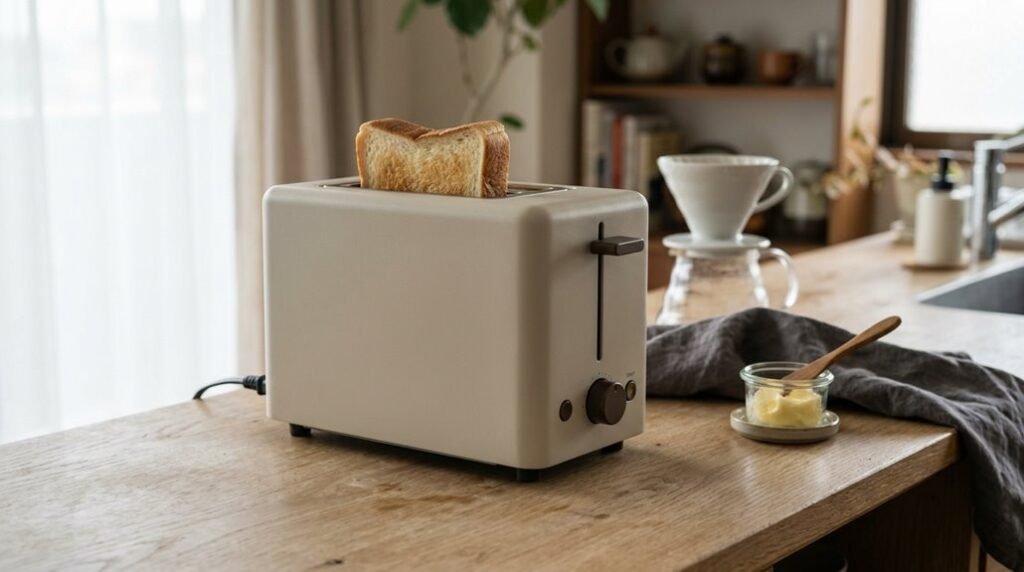
Picture this: it’s a rainy Tuesday morning in Osaka, and you’re watching steam curl from a slice of shokupan that’s somehow crispy outside, pillowy inside, thanks to a toaster that thinks more like a precision instrument than a kitchen appliance.
That’s the Japanese toaster philosophy in 2026, where engineering meets breakfast through steam injection, 3-zone heating, and microcomputer brains that adjust every 30 seconds.
I’ve spent months sorting through spec sheets and user reports to find six models worth your counter space, from retro-styled workhorses to specialized fish roasters that eliminate cooking odors through catalytic magic.
The difference between a $40 toaster and one of these? About three years of daily frustration, give or take.
Here’s what actually matters.
| Mitsubishi Electric Retro Toaster Oven Brown | Best Compact Retro | Wattage: 930 watts | Material: Stainless Steel | Control Type: 4 settings, 5 programs | VIEW LATEST PRICE | Read My Analysis | |
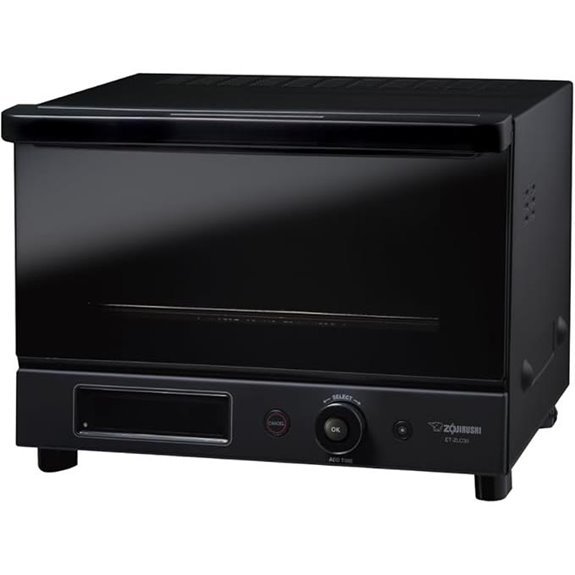
| Zojirushi ET-ZLC30 Micom Toaster Oven Black | Most Versatile | Wattage: 1500 watts | Material: Tempered glass door, metal-sheathed heaters | Control Type: Knob control, monochrome LCD | VIEW LATEST PRICE | Read My Analysis | |
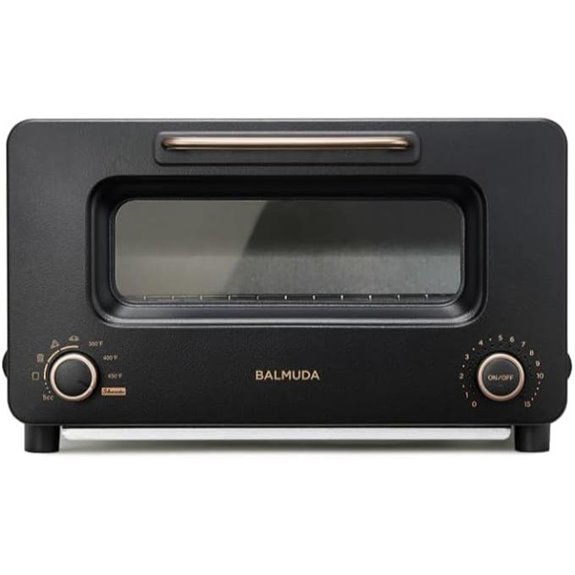
| BALMUDA The Toaster Pro Steam Oven (Black) | Best Premium Steam | Wattage: 1300 watts | Material: Metal | Control Type: Programmable controls | VIEW LATEST PRICE | Read My Analysis | |
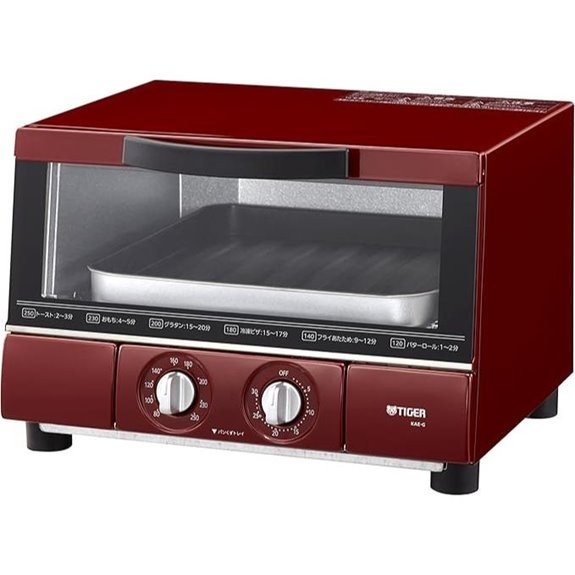
| Tiger oven toaster”YAKITATE” KAE-G13N (Red) | Best Budget Pick | Wattage: 1300 watts | Material: Alloy steel | Control Type: Knob control | VIEW LATEST PRICE | Read My Analysis | |
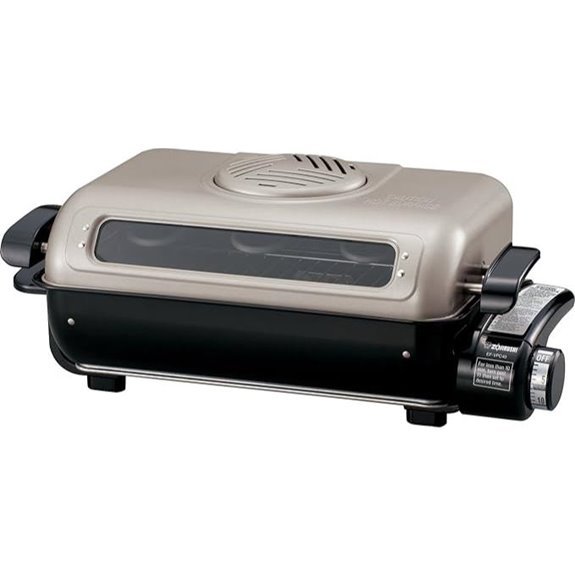
| Zojirushi Fish Roaster (Metallic Gray) | Best for Seafood | Wattage: Not specified | Material: Stainless steel | Control Type: Not specified | VIEW LATEST PRICE | Read My Analysis | |
| Panasonic Toaster NT-T501-W AC:100 | Best for Small Spaces | Wattage: Not specified | Material: Stainless Steel | Control Type: Knob | VIEW LATEST PRICE | Read My Analysis |
More Details on Our Top Picks
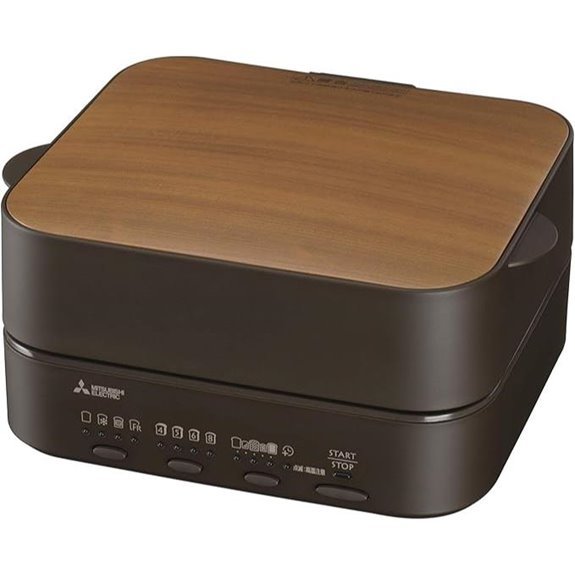
Mitsubishi Electric Retro Toaster Oven Brown
If you’re after a compact retro toaster that doesn’t hog counter space, this Mitsubishi Electric model is the one I’d point you toward. At just 8 inches deep, 9.45 inches wide, and 5.51 inches tall, it tucks neatly into tight corners.
And it weighs only 3.1 kilograms, so moving it around won’t strain your wrists.
The TO-ST1-T runs on 930 watts at 100 volts and handles one slice at a time through its single slot. But don’t let the simplicity fool you.
You’ve got four settings, five programs, and five doneness levels to play with, letting you dial in exactly the texture you’re craving.
The stainless steel body wears that brown retro finish well. It looks like something plucked from a 1960s Tokyo kitchen, in the best way possible.
- Wattage:930 watts
- Material:Stainless Steel
- Control Type:4 settings, 5 programs
- Door Style:Not specified
- Included Components:Grill
- Special Technology:5 doneness levels
- Additional Feature:5 doneness levels
- Additional Feature:Retro brown finish
- Additional Feature:Single sheet toasting
Zojirushi ET-ZLC30 Micom Toaster Oven Black
The Zojirushi ET-ZLC30 is a powerhouse for anyone who wants one appliance that genuinely does it all. I’m talking 12 Micro-Computerized functions packed into a compact 15.25 by 16 inch footprint that won’t dominate your counter.
Here’s what you’re getting:
- Toast, Bagel, Pizza, Cookie, Bake, Roast, Broil, Homemade, Rise, Timed Toast, Reheat, Keep Warm
- 8 heating elements with micro-computerized temperature control
- 5 toast shade settings with frozen selection
The Homemade bread workflow is where this thing shines. It proofs your dough for a second rise, then automatically switches to bake. Completely hands-off.
The mirrored glass face looks sleek, and that monochrome LCD stays dark when off, so no annoying standby glow.
At 1500 watts with double thermostats preventing overheating, it’s built to last. Metal-sheathed heaters, bottom heater guard, BPA-free surfaces. Fits 4 slices or a 12-inch pizza.
- Wattage:1500 watts
- Material:Tempered glass door, metal-sheathed heaters
- Control Type:Knob control, monochrome LCD
- Door Style:Polished glass door
- Included Components:Removable Crumb Tray, Baking Tray, Broil Tray, Mesh Rack, Recipe book
- Special Technology:Micom (micro-computerized), 12 cooking functions, temperature sensing
- Additional Feature:12 Micom cooking functions
- Additional Feature:Automatic Rise-then-Bake
- Additional Feature:Memory feature included
BALMUDA The Toaster Pro Steam Oven (Black)
You want something special on your countertop, and I’ve got just the thing.
The BALMUDA Toaster Pro isn’t just another pretty appliance. This 9.7-pound compact unit, measuring roughly 14 by 13 by 8 inches, packs something genuinely clever: steam technology. You pour 5 cc of water into the top before toasting, and that tiny bit of steam creates a crispy exterior while locking moisture inside. It’s like having a bakery in your kitchen, sort of.
Six modes cover your bases:
- Shokupan (Japanese milk bread)
- Golden Toast
- Pizza
- Croissant
- Oven (350°F, 400°F, or 450°F)
- Salamander Grill for broiling and caramelizing
The three-zone heating and 1300 watts deliver precise results. Metal construction, cool-touch exterior, automatic shut-off. Fair warning: the baking tray’s sold separately.
- Wattage:1300 watts
- Material:Metal
- Control Type:Programmable controls
- Door Style:Not specified
- Included Components:Toasting Rack, 5cc Cup, Instruction Manual/Guidebook
- Special Technology:Steam technology, 3 heating zones
- Additional Feature:Steam technology crisping
- Additional Feature:Three heating zones
- Additional Feature:Salamander Grill mode
Tiger oven toaster”YAKITATE” KAE-G13N (Red)
Looking for serious toast without the serious price tag? I’ve got you covered with the Tiger “YAKITATE” KAE-G13N in red, a Japanese oven toaster that brings 1300 watts of broiling power to your countertop.
Here’s what stands out:
- 8.25-liter capacity – roomy enough for small pizzas, open-faced melts, or four slices
- Dropdown door with stainless steel finish – practical, easy to load, and that candy-apple red exterior? It’s a looker
- Knob controls – no fiddly touchscreens, just turn and toast
The alloy steel body keeps heat where it belongs, and the 1.2-meter cord gives you flexibility on placement. Alloy steel, by the way, means even heat distribution and solid construction that won’t warp over time.
It’s not fancy, but it’s reliable, which is kind of the whole point.
- Wattage:1300 watts
- Material:Alloy steel
- Control Type:Knob control
- Door Style:Dropdown door
- Included Components:Crumb Tray
- Special Technology:Broiler option
- Additional Feature:8.25 liter capacity
- Additional Feature:1.2 meter cable
- Additional Feature:Broiler option available
Zojirushi Fish Roaster (Metallic Gray)
Zojirushi’s EF-VPC40 Fish Roaster excels for home cooks who crave perfectly crisp mackerel or salmon without setting off smoke alarms.
I’ll walk you through why this countertop unit’s worth your counter space. At 19.13 inches long, it’s substantial but fits most kitchens, and that extra-wide stainless steel rack handles hefty catches plus meats when fish isn’t on the menu.
Here’s the real magic: top and bottom heating elements cook evenly without flipping, while heat reflectors boost that crackling skin we all fight over.
The platinum catalytic filter’s what separates this from gimmicky alternatives. It chemically breaks down smoke and odor particles into carbon dioxide and water, and Zojirushi claims 90% reduction. Unlike disposable filters, this one doesn’t deteriorate or need swapping. Smart!
The rack drains fat away from food, though you’ll hand-wash it, no dishwasher here. Eleven pounds of heft feels quality-built, and that metallic gray finish won’t clash with your other appliances. Two-pound capacity feeds a small family comfortably.
- Wattage:Not specified
- Material:Stainless steel
- Control Type:Not specified
- Door Style:Lid with catalytic filter
- Included Components:Fish Roaster
- Special Technology:Platinum catalytic filter, top/bottom heat reflectors
- Additional Feature:Platinum catalytic filter
- Additional Feature:Top/bottom heat reflectors
- Additional Feature:90% smoke reduction
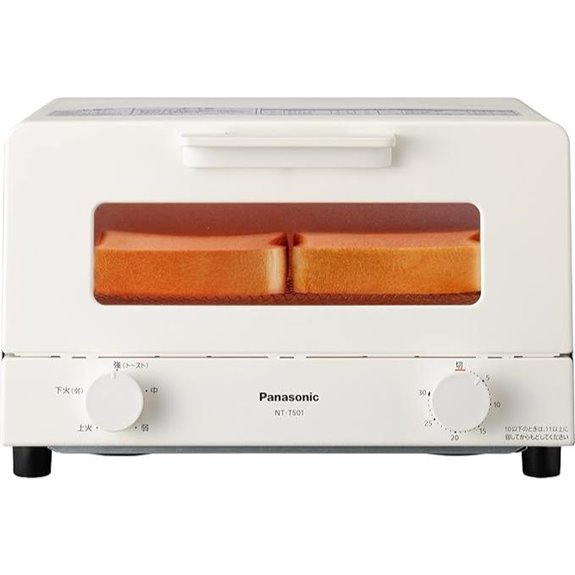
Panasonic Toaster NT-T501-W AC:100
The Panasonic NT-T501-W proves that compact kitchens deserve serious toast engineering. I’m genuinely impressed by how this small-footprint toaster delivers professional results without hogging your counter.
Let’s break down what makes this unit sing:
- Stainless steel body with a clean white painted finish that resists fingerprints
- Drop-down door design, which I’ve found creates better heat retention than traditional slot toasters
- Wattage control knob for dialing in your ideal browning level
- Includes a grill component for open-faced melts and small reheating jobs
At AC 100V, it’s built for Japanese voltage, so you’ll need a step-down converter for North American kitchens. But that drop-down door? Game changer for loading thick sourdough slices or checking progress without cancellation. No warranty specifics listed, unfortunately, so I’d contact Panasonic directly before purchasing.
For small-space dwellers who refuse to compromise on toast quality, this delivers.
- Wattage:Not specified
- Material:Stainless Steel
- Control Type:Knob
- Door Style:Dropdown
- Included Components:Grill
- Special Technology:High wattage control
- Additional Feature:Small compact size
- Additional Feature:White painted finish
- Additional Feature:High wattage control
Factors to Consider When Choosing a Japanese Toaster
When I’m picking out a Japanese toaster, I weigh five things that’ll make or break your morning routine: size and capacity, wattage and power, heating technology, control options, and safety features. And don’t worry, I’ll walk you through each one so you know exactly what you’re looking at on those product pages! Let’s unpack how these factors separate the countertop champions from the appliances that’ll gather dust.
Size and Capacity
Capacity ratings need detective work as well. Manufacturers love throwing around numbers, but I’ve learned to dig deeper.
First, measure your countertop. That compact 14.1″W × 12.6″D × 8.2″H beauty won’t help if it crowds your coffee station. And those larger “bread oven” styles? Gorgeous, but they demand real estate.
Now, slice counts. Four slices sounds generous until you’re feeding a family of four. Some Japanese models list capacity in liters (around 8.25L is common), which I compare against actual rack dimensions.
Because in particular: a “4-slice” rating might mean four small bread squares, not your artisan sourdough. Check what shape they’re measuring too. A unit rated for “1 sheet” could mean one baking sheet of toast, requiring multiple cycles for brunch crowds.
Match internal space to your actual food. Bagels, frozen pizza, leftover takoyaki, whatever you’re crisping, it all needs room to breathe!
Wattage and Power
Beyond just warming bread, wattage determines whether your morning routine feels brisk or sluggish. I’ve noticed that higher wattage models, think 1500W, typically preheat faster and toast your bread more aggressively than their 930W or 1300W cousins. But the tricky part: wattage alone won’t save you from uneven cooking.
Check these essentials before buying:
- Voltage rating (usually 100V or 120V) must match your outlet, or you’ll get reduced performance
- Whether computerized controls compensate for power differences
- If the thermal design actually supports that wattage
And don’t ignore the heating element design! Two 1500W units can behave completely differently depending on how they distribute that heat.
For frequent toasters, higher wattage improves throughput, just verify the internals can handle it.
Heating Technology
Wattage tells you how much power’s on tap, but it’s the heating technology that decides whether your toast comes out magazine-perfect or disappointingly patchy. I’ve found that microcomputer-controlled heating with interior temperature sensing makes the real difference, fine-tuning output so your morning slice hits that sweet spot every single time.
Higher wattage (think 1500W versus 930W) means faster preheating and more aggressive browning when you want that crunch. But here’s where it gets interesting: some Japanese models use steam generation, adding a measured water dose to crisp the exterior while keeping the interior pillowy. Genius!
Multi-element designs with heating zones distribute warmth evenly, so no more pale corners and burnt centers. And don’t overlook double thermostats: they’re your safety net against overheating that degrades performance over time.
Control Options
Whether you’re a set-it-and-forget-it type or someone who tweaks settings like a sound engineer at a mixing board, the control scheme on a Japanese toaster will make or break your morning routine. I’ve found that knob control suits folks who want tactile simplicity, while programmable electronic controls deliver repeatable precision for your perfect slice every time.
Most Japanese models offer 4–5 shade levels, so you’re not stuck with binary toast outcomes. And if you’ve ever pulled out bread that’s still ghostly pale, you’ll appreciate digital features like LCD displays and “add time” buttons that let you extend the cycle without starting over.
Memory functions are unsung heroes here, recalling your last setting so you skip the daily dial-in dance. Just check whether the timer counts down from preheat or from insertion. That timing detail shapes how long you’ll actually wait.
Safety Features
Once you’ve got your controls sorted out, the next thing on my mind is always safety. I won’t risk my kitchen for perfectly browned toast, and neither should you.
Here’s what I look for:
- Double thermostats for overheating protection, because one safeguard is never enough
- Cool-touch exteriors, so accidental brushes don’t mean emergency room visits
- Heater guards, especially on the bottom, keeping curious fingers and stray utensils away from hot elements
- Metal-sheathed heaters, which are durable and less prone to damage that could spark trouble
And don’t overlook the basics: clear timers and automatic shut-off functions that actually work. You want predictable, reliable stopping power, not a guessing game with open flames.
Safe toasting isn’t boring, it’s smart!
Material Quality
Before you get seduced by sleek lines and retro curves, let’s talk about what these toasters are actually made of. Pretty finishes won’t mean much if the metal warps or the interior starts flaking after a year of morning crunches.
I always prioritize stainless steel bodies and interior surfaces. You’ll get better heat resistance and long-term durability than painted metals that chip or degrade. And if the door or frame uses stainless steel too, that structural integrity holds up through countless high-temperature cycles.
Check for BPA-free materials on any food-contact surfaces: safety first, always. Look for well-protected heating elements with durable sheaths around them; exposed hardware wears faster and breaks easier.
If you’re cooking greasy foods regularly, metal heat reflectors and oil-directing racks make cleanup simpler while keeping performance steady. Quality materials pay off!
Included Accessories
When you’re dropping serious yen on a Japanese toaster, what’s actually in the box matters just as much as the machine itself. I’ve learned to dig past the glossy marketing and check the accessory list line by line.
Look for these essentials:
- Removable grill or mesh rack (your shortcut to open-faced melts and easy broiling)
- Baking tray or dedicated broil tray (because “toaster” shouldn’t mean “toast only”)
- Extra-wide roasting rack for heftier items like whole fish or packed sandwiches
- Removable crumb tray (trust me, you’ll thank yourself at cleanup time)
- Recipe and instruction guide (Japanese models often build their workflows around these)
Removable parts aren’t a luxury here. They’re the difference between wiping down in thirty seconds and wrestling with crumbs for ten minutes. And that recipe booklet? It’s often where the real magic hides.
Brand Reliability
Because a toaster sits on your counter for years, you’ll want to know who’s actually backing it up.
I dig into customer review metrics to spot consistent satisfaction. A 4.6/5 rating from 890 reviews often beats a 4.2/5 from 1,434, it’s about quality over crowd size.
I check warranty access too, since responsive support signals a brand that stands behind its work. Look for overheating protection and double thermostats, guarded heater structures that prevent failure, and stainless-steel bodies with sturdy heater sheaths.
These build details matter. And I glance at best-seller ranks, sustained demand usually means ongoing quality checks. You’re not just buying specs, you’re buying years of dependable mornings!