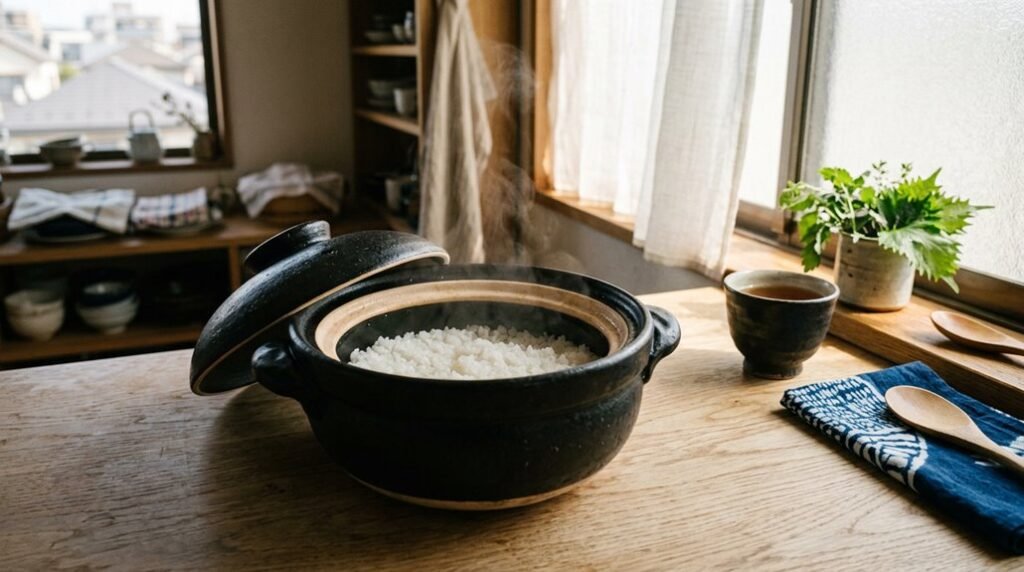
You might think a dedicated clay pot for rice is kitchen overkill, but the difference between donabe-cooked grains and standard pot rice is the kind of revelation that changes your weekly cooking.
These Japanese earthenware vessels (donabe literally means “clay pot”) use gentle, even heat to create that sought-after texture called koshi: rice with subtle chew and individual grain definition you simply won’t achieve with metal.
I’ve spent considerable time researching what makes a donabe worth your counter space, from Banko Ware’s centuries-old firing techniques to modern conveniences like double-lid steam control.
And here’s what caught my attention.
The seven models I’m about to walk through range from compact two-cup options perfect for solo cooks to larger family-sized vessels, spanning traditional stovetop designs and one electric outlier.
Each brings something distinct to your kitchen.
The real question isn’t whether you need one, it’s which clay pot actually fits your heat source, batch size, and willingness to season unglazed earthenware.
Let’s sort that out.
| Banko Ware Earthenware Rice Cooker Donabe (3-4 Cups) | Best for Traditionalists | Material: Pottery (earthenware) | Capacity: 3–4 cups | Lid Type: Double-lid | VIEW LATEST PRICE | Read My Analysis | |
| HARIO Rice Pot with Glass Lid (2-3 Cups) | Best Glass Lid Design | Material: Heat resistant ceramic | Capacity: 2–3 cups | Lid Type: Glass lid | VIEW LATEST PRICE | Read My Analysis | |
| Japanese Clay Pot Donabe Set with Steamer Tray (2000ml) | Most Versatile Set | Material: Clay | Capacity: 2000ml (8.5 cups) | Lid Type: Double-lid (outer + inner) with steamer tray option | VIEW LATEST PRICE | Read My Analysis | |
| Nagatani Seitou Earthenware Rice Pot for 2 (Made in Japan) | Best for Small Households | Material: Ceramic (Iga ware) | Capacity: 2 people (approx. 3.3 gal) | Lid Type: Double lid | VIEW LATEST PRICE | Read My Analysis | |
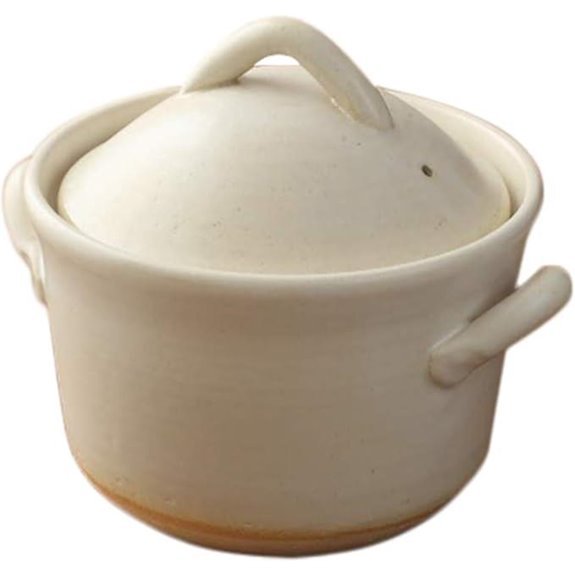
| Japanese Donabe Cocer Rice Cooking Pot 3 Go 2200cc White | Best Oven-Safe Option | Material: Ceramic (Banko-Yaki) | Capacity: 3 cups (3 Go, 2200cc) | Lid Type: Clay lid | VIEW LATEST PRICE | Read My Analysis | |
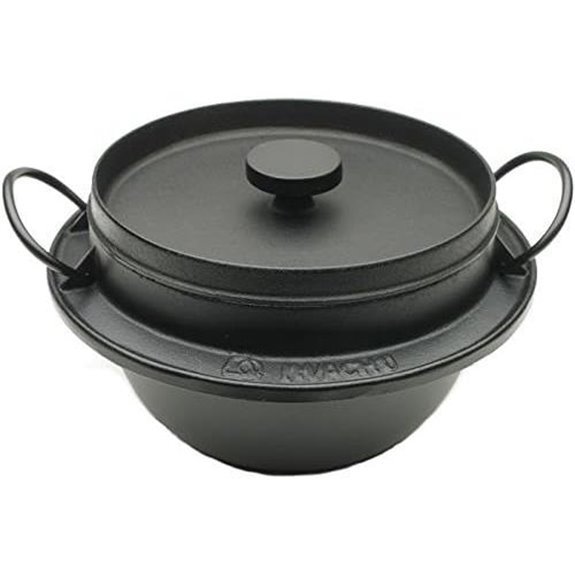
| Iwachu 410-720 Japanese Cast Iron Gohan Nabe Rice Cooker Black | Best Cast Iron Build | Material: Cast iron | Capacity: 2 go (1–1.5 cups uncooked) | Lid Type: Heavy iron lid with condensation bumps | VIEW LATEST PRICE | Read My Analysis | |
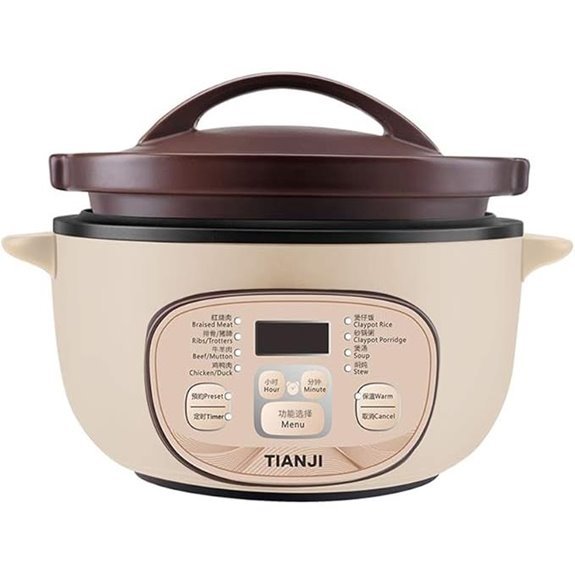
| DSG-TZ30 Electric Clay Pot Slow Cooker 3L | Best Electric Option | Material: Porcelain ceramic | Capacity: 3L / 3.17 Quarts | Lid Type: Ceramic lid | VIEW LATEST PRICE | Read My Analysis |
More Details on Our Top Picks
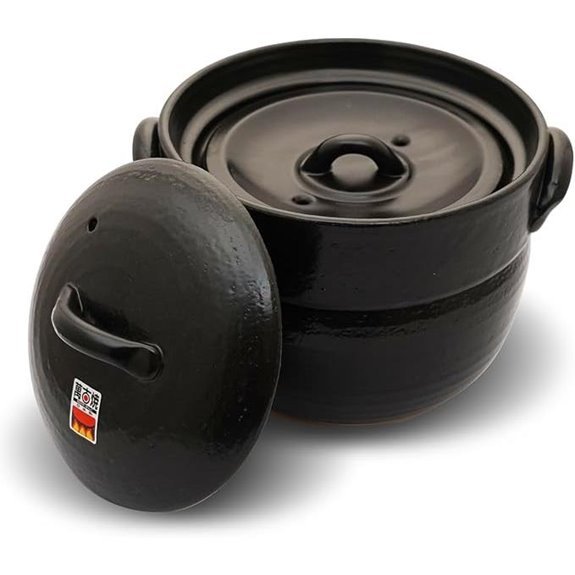
Banko Ware Earthenware Rice Cooker Donabe (3-4 Cups)
If you’re after rice the old-fashioned way, this Banko Ware pot is your kind of find. I love how this 3-4 cup donabe from COTONOHA brings centuries of Japanese craft straight to your stovetop. The double-lid design traps steam beautifully, and that rounded earthenware body cooks each grain evenly down to the core.
Here’s what makes it remarkable:
- Slow, gentle heat transfer (no scorched bottoms!)
- Retains warmth long after the flame’s off
- Each grain gets that perfect “bite,” the Japanese call it koshi
At 7.8 x 9.05 x 7.3 inches and over 7 pounds, it’s substantial without being unwieldy. But heads up: gas stoves only! No induction here.
First use requires a quick seal with rice water or flour paste (1-2 tablespoons), boiled low and slow, then cooled. Wash well after, and you’re set. The English manual walks you through it.
Beyond rice, I reach for mine when stew season hits. One pot, endless comfort!
- Material:Pottery (earthenware)
- Capacity:3–4 cups
- Lid Type:Double-lid
- Heat Source:Gas stovetop only
- Origin:Japan (Banko ware)
- Primary Use:Rice, stews, hot pots
- Additional Feature:Double-lid design
- Additional Feature:Sealing with flour
- Additional Feature:Retains heat well
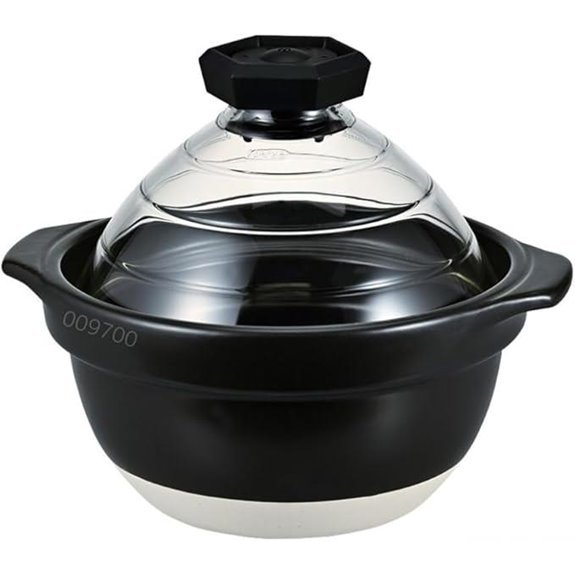
HARIO Rice Pot with Glass Lid (2-3 Cups)
The Hario GNR-200-B-W earns its reputation for the standout glass lid design in this category. I love that I can peek at my rice without lifting anything, keeping all that precious steam exactly where it belongs.
This Japanese-made pot holds 2-3 cups and weighs just under 5 pounds, with heat-resistant ceramic doing the main work. The built-in whistle shouts when things are happening, so I won’t forget to adjust the heat—though honestly, I don’t even need to.
The thick walls handle slow boiling on their own, then keep everything cozy using stored heat after I kill the flame.
What you get:
- Transparent glass lid for visual monitoring
- Whistle notification system
- No-fuss heat management
At 10.6 inches wide, it fits most stovetops comfortably. Just skip the oven; this one’s stovetop only.
- Material:Heat resistant ceramic
- Capacity:2–3 cups
- Lid Type:Glass lid
- Heat Source:Stovetop (gas)
- Origin:Japan
- Primary Use:Rice (boiling)
- Additional Feature:Transparent glass lid
- Additional Feature:Whistle notification
- Additional Feature:No heat adjustment
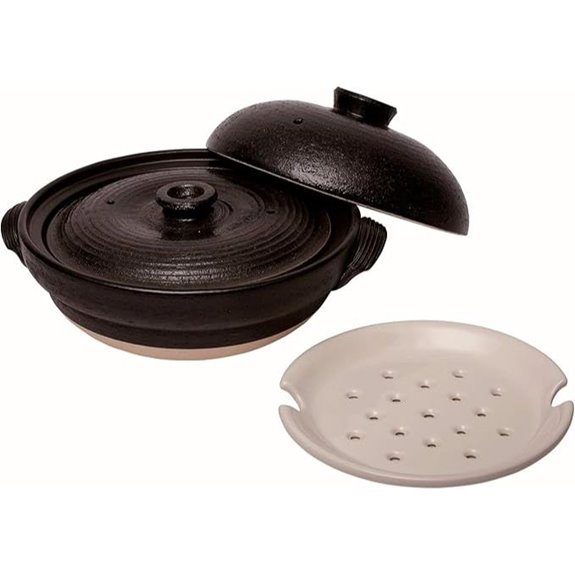
Japanese Clay Pot Donabe Set with Steamer Tray (2000ml)
Looking at your rice goals and dinner-party plans, I’d reach for this 2000ml donabe set first.
This IPPINKA set handles three to four people comfortably, and that versatility matters! I love how you’re getting three tools in one: the outer lid, inner lid, and that steamer tray they call “sunoko.” Make rice with both lids for fluffy, sticky perfection.
Or swap in the steamer tray plus outer lid for meats and vegetables, and watch excess oil drain away while flavors concentrate.
The real magic here is Banko-yaki, authentic pottery from Mie, Japan dating back to the 18th century. The clay body radiates far-infrared heat, revealing flavors you won’t get from metal.
It stores heat beautifully too, so your table stays warm through conversation.
At 10.6 inches diameter and 2000ml capacity, it’s substantial. Black painted finish looks elegant. Oven-safe to 360°C (body only, mind you), though skip the dishwasher and induction.
- Material:Clay
- Capacity:2000ml (8.5 cups)
- Lid Type:Double-lid (outer + inner) with steamer tray option
- Heat Source:Gas/open fire (oven safe)
- Origin:Japan (Banko-yaki, Mie)
- Primary Use:Rice, stews, steaming
- Additional Feature:Far-Infrared Rays cooking
- Additional Feature:Steamer tray included
- Additional Feature:Oven safe body
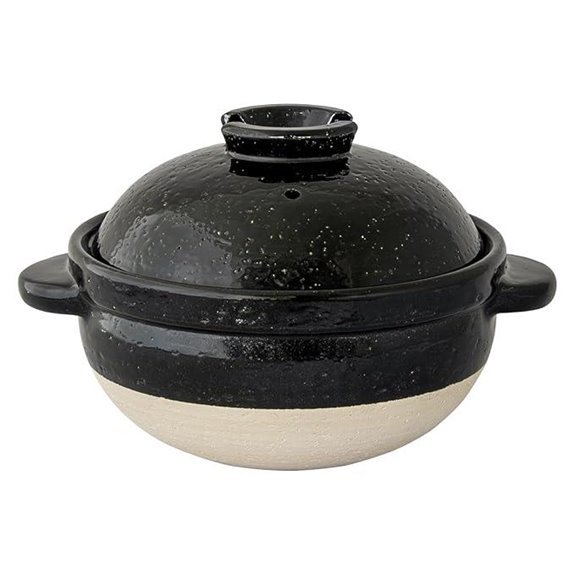
Nagatani Seitou Earthenware Rice Pot for 2 (Made in Japan)
Small households craving that perfect pot of rice, I’ve found your match. The Nagatani Seitou Earthenware Rice Pot for 2 serves exactly what its name promises: compact, authentic donabe cooking without leftovers haunting your fridge.
Here’s how it works. You’ll need about 10 to 12 minutes on medium and high heat, followed by 20 minutes of gentle steaming. The double lid construction prevents those rookie spills that ruin stovetops and confidence alike.
And that Iga clay? It behaves like a tree, skillfully keeping grains separate and glossy rather than gluing together into disappointment.
Handmade in Japan since 1832 at the Haseen kiln, this piece carries 1,300 years of ceramic tradition. You’ll notice slight variations in size and color, that’s the charm of individually crafted ware.
Specifications that matter:
- 8.5 inch diameter, 6.3 inches tall
- Weighs 6.6 pounds
- Includes rice scoop and recipe
White rice, brown rice, even revitalizing day-old cooked rice, this pot handles them all with steady heat retention. Gas fire only, so plan accordingly.
- Material:Ceramic (Iga ware)
- Capacity:2 people (approx. 3.3 gal)
- Lid Type:Double lid
- Heat Source:Gas fires
- Origin:Japan (Iga ware)
- Primary Use:Rice (white, brown, cooked)
- Additional Feature:Iga ware ceramic
- Additional Feature:Built-in spill prevention
- Additional Feature:Includes rice spoon
Japanese Donabe Cocer Rice Cooking Pot 3 Go 2200cc White
Cooks craving an oven-safe donabe won’t find a more reliable companion than IPPINKA’s 3 Go Banko-Yaki pot.
This 2200cc white beauty holds three cups of rice and weighs just over six pounds, with rough, coarse soil that’s uncoated and utterly traditional. I love that it’s handmade by Mie Prefecture craftsmen using Banko-Yaki techniques passed down through generations.
And here’s where it gets practical: this pot plays nice with gas, electric, and microwave heat, plus it’s oven-safe for those crispy rice edges or warming casseroles. But keep it away from induction cooktops, entirely incompatible.
Care’s straightforward but requires attention. Hand wash only, no dishwasher shortcuts.
The 8.3-inch width and 7.9-inch height store easily, and you get an instruction manual to guide your first few attempts.
Your 3 Go capacity serves small households perfectly, roughly three rice bowls per batch.
- Material:Ceramic (Banko-Yaki)
- Capacity:3 cups (3 Go, 2200cc)
- Lid Type:Clay lid
- Heat Source:Stove, microwave, oven (not induction)
- Origin:Japan (Banko-Yaki, Mie)
- Primary Use:Rice cooking
- Additional Feature:Microwave compatible
- Additional Feature:Banko-Yaki ceramic
- Additional Feature:Handmade craftsmanship
Iwachu 410-720 Japanese Cast Iron Gohan Nabe Rice Cooker Black
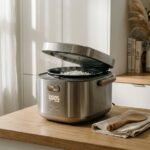
This one’s for you if you want cast iron craftsmanship without compromise. Iwachu’s been handcrafting ironware for over a century, and this 2-go gohan nabe shows why that matters.
You’ll get about 1-1/2 cups uncooked rice, enough for two people. The 5.6-pound body (that’s serious heft!) holds heat like nothing else, and that heavy lid seals tight.
I love the clever details: raised bumps underneath distribute condensation evenly, and a rim channel catches boil-overs before they become disasters.
Want takikomi gohan? Swap water for light dashi, add a splash of soy sauce, mirin, and sake, then toss in matsutake mushrooms, sea bream, or whatever five ingredients you’ve got for gomoku gohan.
It’s electric (500 watts, 120 volts), so no stovetop guessing. Hand wash only, in plain sight.
- Material:Cast iron
- Capacity:2 go (1–1.5 cups uncooked)
- Lid Type:Heavy iron lid with condensation bumps
- Heat Source:Electric (500W, 120V)
- Origin:Japan
- Primary Use:Rice, takikomi gohan
- Additional Feature:Raised bump lid pattern
- Additional Feature:Built-in spill channel
- Additional Feature:Takikomi gohan suitable
DSG-TZ30 Electric Clay Pot Slow Cooker 3L
I wanted something authentic, and this electric pot delivers. The Tianji DSG-TZ30 brings unglazed porcelain into the modern kitchen, with 3 liters feeding 2–6 people comfortably.
Here’s what you get with those 8 cooking programs:
- Claypot rice with that coveted crust
- Casserole porridge for slow mornings
- Braised pork, ribs, beef and mutton
- Chicken and duck, soup, and stew
The 24-hour reservation and 5-hour timed cooking mean you’re not tethered to the kitchen. Touch controls handle the switching, then it rests in keep-warm mode.
The 450-watt deep arc heating plate hugs the ceramic bottom, distributing heat evenly so nutrients release fully without the eruption risk.
Best part? That inner pot lifts out for open-fire finishing if you’re feeling traditional—just cool it before cleaning, thermal shock cracks porcelain. The smooth surface cleans easily, and yes, it’s dishwasher safe.
At 8.66 inches wide and 120V, it fits standard counters.
- Material:Porcelain ceramic
- Capacity:3L / 3.17 Quarts
- Lid Type:Ceramic lid
- Heat Source:Electric (450W, 120V)
- Origin:China (Tianji)
- Primary Use:Claypot rice, porridge, braising, stewing
- Additional Feature:24-hour reservation
- Additional Feature:Eight cooking programs
- Additional Feature:Open fire compatible
Factors to Consider When Choosing a Donabe Rice Cooker
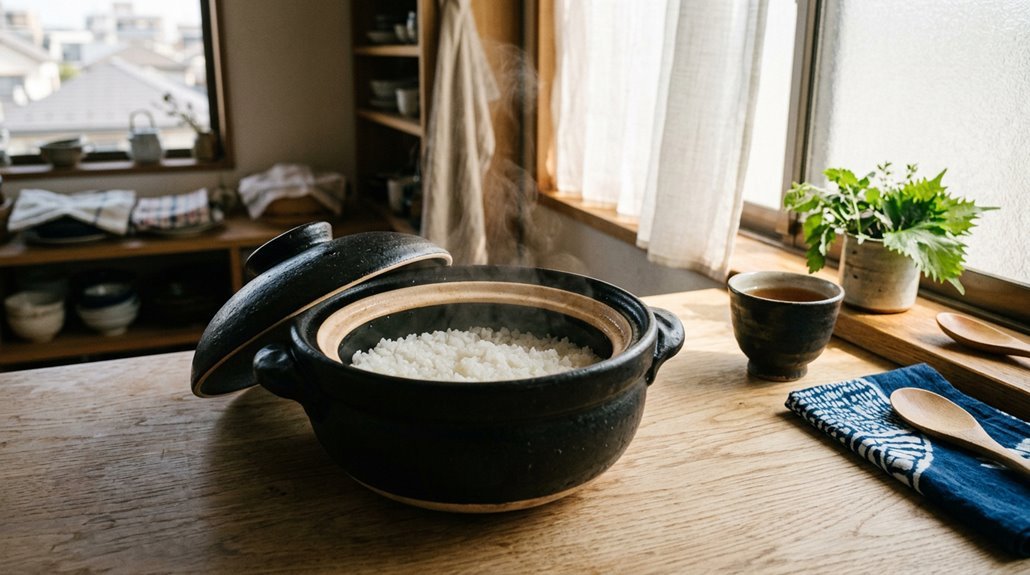
I’ll walk you through what actually matters when picking out one of these clay pots, because not every donabe is built the same and you’ll want to match it to your kitchen, your crowd, and your ambitions. We’re talking about the clay body and who’s throwing it, how many mouths you’re feeding, whether you’ve got gas, induction, or just a hot plate, plus those lid tricks that trap steam or let it escape, and whether you’re buying a one-trick pony or something that’ll braise a whole chicken on Sunday. And honestly? Getting these five things right saves you from that sinking feeling of cracking your pot on the wrong burner or realizing you’ve cooked enough rice for twelve when it’s just you and the cat.
Material and Craftsmanship
The heart of any donabe rice cooker lies in what it’s actually made of, and I’m convinced this matters more than most people realize.
You’ll want to prioritize the pot material itself. Japanese earthenware like Banko-yaki or coarse-soil clays work beautifully because thicker, heat-retentive clay cooks rice gently and evenly. No hot spots, no burnt bottoms!
Look for craftsmanship details that signal quality:
- Handmade construction and traditional kiln origins
- Rough, coarse-textured interiors that help prevent overly sticky rice
- Uncoated ceramic surfaces, which let moisture and starch interact naturally
And don’t overlook the lid! Double-lid or well-fitted designs control condensation return, directly affecting texture.
One practical heads up: most ceramic donabe handle up to around 360°C, but sudden temperature changes will crack them. Treat your pot kindly, and it’ll reward you for years.
Capacity and Serving Size
Most donabe rice cookers you’ll encounter fall into a pretty straightforward size range, and getting this right matters more than you’d think. I’ve seen too many home cooks wrestle with soggy bottom layers or uneven texture simply because they picked the wrong size for their needs.
Here’s the breakdown that actually works:
- 2-cup class: Perfect for 1–2 people, maybe with modest leftovers
- 3–4 cup range: Designed for 3–4 servings, your small family solution
Watch for Japanese listings using “go” (合) or milliliters (3 go ≈ 2200 cc). I always convert these to US cups for easier comparison.
And here’s the real trick: don’t underfill. These clay pots need sufficient mass to distribute heat evenly through that beautiful round base. If you’re usually cooking for one, resist the urge to size up. A 2–3 cup donabe you’ll actually fill beats a half-empty 4-cup pot every single time.
Heat Source Compatibility
Once you’ve settled on the right size, you’ve got to make sure your kitchen can actually handle the thing. Donabe aren’t universal cookware, and heat-source mismatch can ruin your pot (or worse).
Check these specifics:
- Gas-only models are common, so confirm your stovetop type matches.
- Induction (IH) compatibility isn’t standard. Look for explicit “induction stove: cannot be used” warnings to avoid overheating disasters.
- Open-fire versus standard stovetop matters for safe operation.
I always hunt for clear listings that spell out acceptable cooktops: gas yes, IH no, that sort of thing. Some stovetop pot-style donabe handle oven or indirect heat beautifully, but still choke on induction.
Know your kitchen, read the fine print, and you’ll avoid an expensive ceramic paperweight!
Lid Design Features
While heat source compatibility keeps your donabe alive, it’s the lid that actually makes your rice worth eating.
I’ve found that double-lid designs are transformative. An inner lid trapped beneath the outer lid creates a steam chamber that delivers fluffy, evenly cooked grains every single time. Look for tight-sealing lids, too. Heavy, well-fitting tops prevent precious steam from escaping during that key simmer-to-steam change.
Some clever lids feature raised bump patterns that redirect condensation back onto your rice rather than letting it drip away. And if you’re prone to kitchen disasters, prioritize lids that reduce boil-over by channeling overflow back into the pot. Trust me, you’ll thank yourself.
Material matters: ceramic and clay excel at gentle moisture retention, while glass lids offer visibility without lifting. Choose what fits your cooking style.
Versatility Beyond Rice
A perfect lid gets you flawless rice, but I’ve learned the real magic happens when your donabe earns its keep beyond the grain. That same heat-retaining clay that gently steams your grains doubles as a beautiful serving vessel for bubbling stews and hot pots that stay warm through the entire meal.
Here’s what I look for when shopping for versatility:
- Multi-functional designs: Models with steamer trays expand your repertoire to steamed fish or vegetables, while double-lid setups balance evaporation whether you’re cooking rice or braising pork belly.
- Temperature flexibility: Check those oven specs. Some donabe handle up to around 360°C (body only, mind you!), opening possibilities for gratins and roasted dishes.
- Moisture control: Lids that manage condensation let you nail takikomi mixed rice or casserole-style creations without soggy disasters.
- Stove compatibility: Confirm your cooktop plays nice, since you’ll switch recipes often and hand-washing between uses becomes routine.
Care and Maintenance
Choosing a donabe means signing up for a relationship, and I’ve learned that relationship thrives or dies on maintenance habits you’re actually willing to keep.
First, season that uncoated clay properly: boil water with rice-rinsing water or 1–2 tablespoons of wheat flour on low to medium heat, let it cool completely, then wash well. This prevents sticking and leakage down the road.
Avoid sudden temperature changes like the plague. Never rinse a hot pot with cold water, and don’t shock it with abrupt heating or cooling: rapid shifts crack clay.
Clean gently by hand only; dishwashers destroy unglazed surfaces. Dry thoroughly inside and out before storing, or you’ll trap moisture and odors.
Keep lids residue-free, use correct boil/steam methods to prevent scorching, and your donabe will reward you for years.